
Plumbing rough-in needs to happen before electrical and mechanical rough-in as drainage requires specific placement and gradients whereas electrical and mechanical have more routing flexibility.
Grohe Sense Guard
As the hot water cylinder will be buried away in the dead-corner of the kitchen cabinets I wanted to be able to detect water leaks and automatically shutoff the water. I went with Grohe’s Sense Guard system. I needed two of these for the City Water and Rainwater supplies. There are a bunch of valves so each unit can be bypassed and maintained.
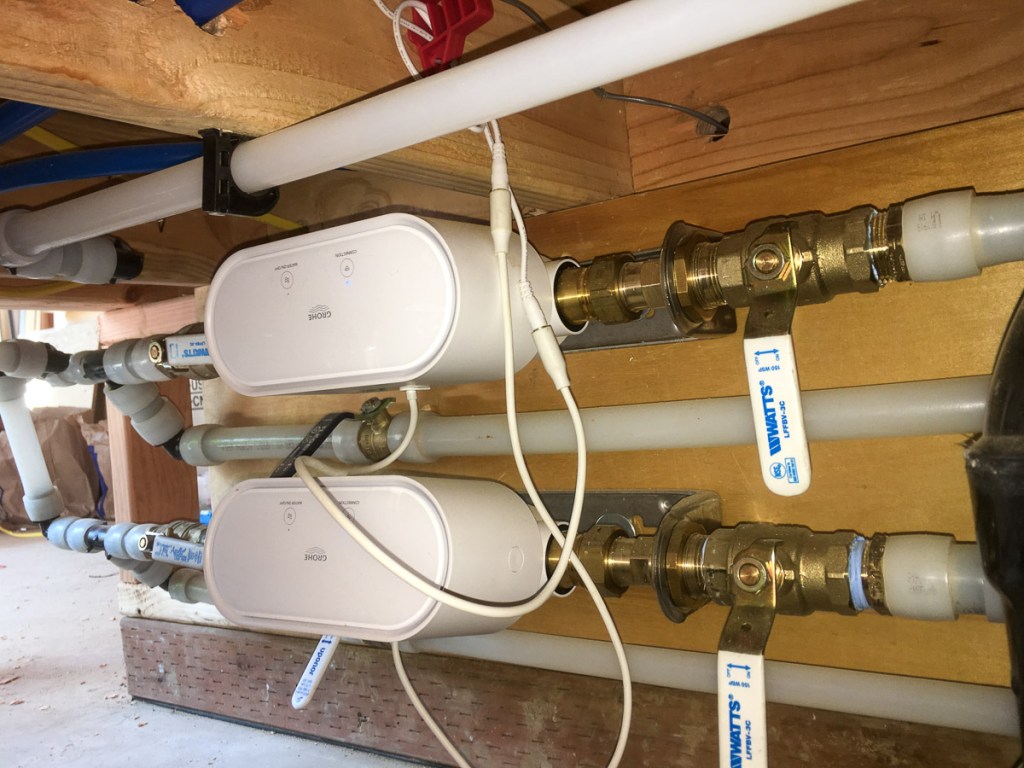
Once installed and connected to WiFi and my phone app I’m able to receive notifications of water leaks, remotely turn water service on and off, and track water usage in gallons, water temperature and pressure.

Supply lines
Bathroom, shower, and kitchen hot and cold lines were installed as home-runs to manifolds using 1/2-inch PEX.
The toilet, laundry and outdoor faucet were run as 1/2-inch purple PEX to a rainwater manifold.
Each homerun line can be individually isolated with a valve located at the manifold.

Toilet
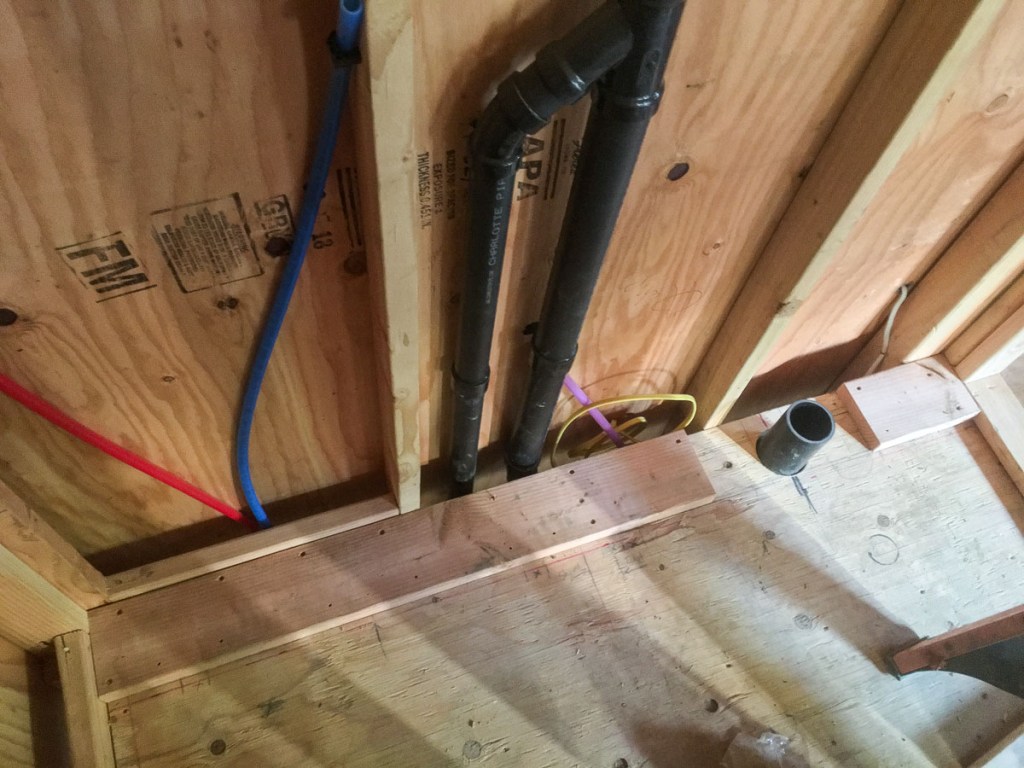
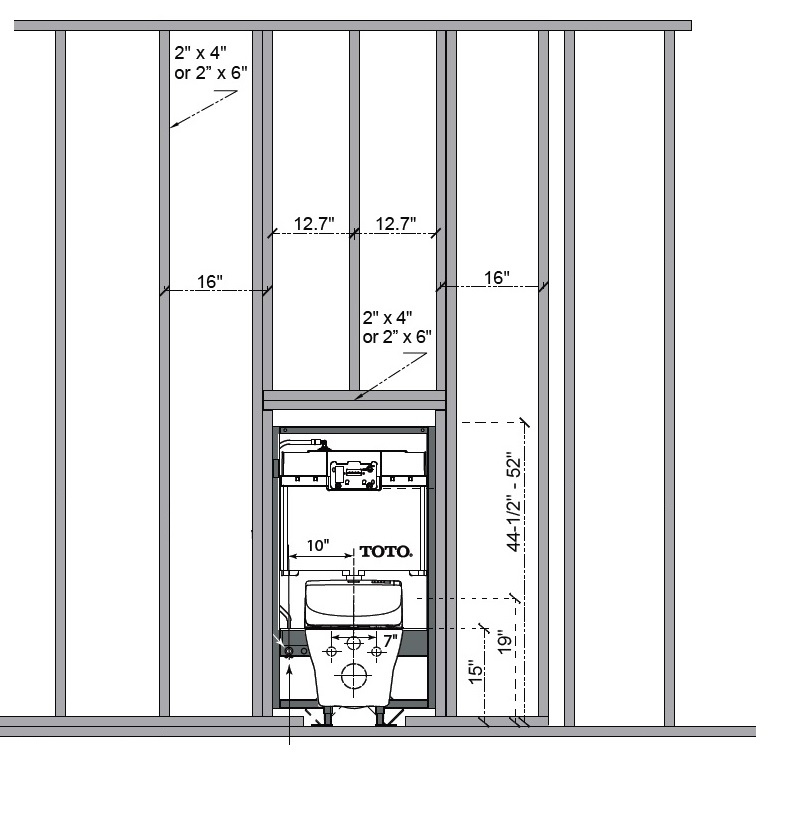
The back wall of the bathroom is framed out an additional 6-inches. This provides space for an in-wall tank for the wall-hung toilet and for routing shower lines without intruding into the insulated 3.5-inch framing cavity.
Toto provides a detailed framing plan for their wall-hung toilets.
There is an electrical outlet installed to left of the toilet for a Toto bidet toilet seat.

Vents
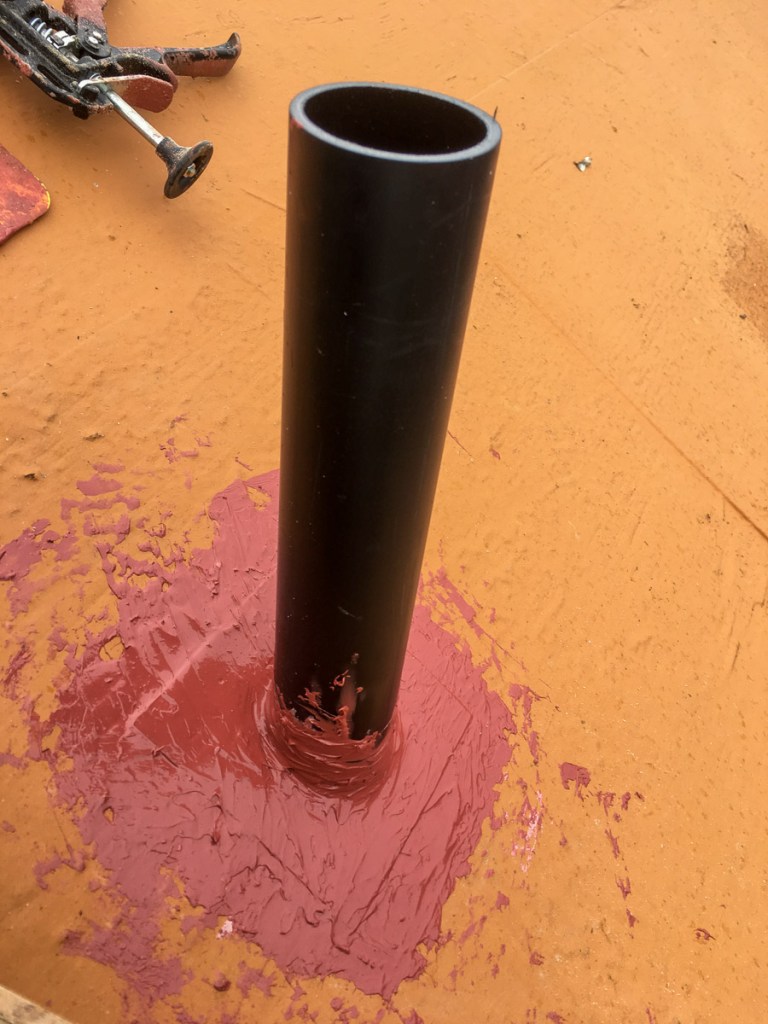
The toilet and shower are vented through the roof. The roof penetration was sealed using a Roflex 30 gasket from 475 High Performance Building Supply and this was then sealed with Prosocco liquid membrane.
The basin, kitchen, and laundry drains are vented using Air Admittance Valves as there was not enough room to run vents through walls.

Outdoors Faucet
I used Aquor’s “House Hydrant” connected to the rainwater manifold for the outdoor faucet. Aquor is based in Washington state.
https://aquorwatersystems.com/

 Irvington Cottage
I see but never used these materials as they are not common. I know sealed house may have extra humidity that asks for extra ventilation which is not natural. You seal – need vent, why not seal that much so you no need extra vent? I know school people pushes this w/o aware of humidity issues years ago.
You also installed a wall mount toilet, which I feel it would be hard to maintain in future. Materials w/o mess production I usually get rid of, as they are not proved and costy.
I will build a 1000sqft ADU soon in Bay area CA, would you mind to give any comments?
LikeLike
Modern code requires a sealed structure plus ventilation to control humidity and air quality. My goal was to create a highly energy efficient structure so I was fine with this.
I know the structure is extremely well sealed because the range hood doesn’t remove any air unless a window is cracked open. I considered adding a make-up supply with a motorized damper, but decided to keep things simple in the end.
It was a super small bathroom so having foot-room under the toilet was highly desirable. If you have more space to play with then a regular floor mount would be fine. Maintenance of in wall tanks can be done through the flush cutout. I’m not a plumber so I don’t know how difficult that is; I bet it’s a pain. Otherwise the tank should be good for decades.
LikeLike